Thursday, March 15, 2012

Access Denied

"No Trespassing." "Closed." "Private Property."  "Stay Out."  Signs like these are popping up more and more every day across Montana and around the country.  Don't get me wrong, landowners have every right to do what they want with their property.  I just really appreciate those who open their land to those who enjoy the great outdoors.

Let me give you some examples.  I know the manager of a cattle ranch close to my home.  He allows me to access the land in order to reach a four-mile long stretch of my favorite creek, Lolo Creek, to fish.  Montana law stipulates any angler can fish any stretch of water as long as they are below the high-water mark, but the biggest challenge is often finding a public access point to even get to the water.  This small, often overlooked creek, is an excellent fishery loaded with three different kinds of trout.  It is where I learned the art of fly fishing.  It is also where I caught my largest fish ever a couple of years ago--a 21 inch monster of a brown trout. 


Ironically enough, this same 4,000 acre cattle ranch is off-limits to hunters even though it is home to a resident elk herd.  It wasn't always that way.  Years ago, the owner allowed access but an unethical hunter fired again and again into the herd, wounding many elk and killing several others.

Property ownership really comes into play for hunters.  Of the six deer I harvested, four were on private property.  Of the four deer my son harvested, three were on private property.  Each of us also took one elk, but both times the successful hunts were on private ranch land. 

 Hundreds of property owners across Montana take part in what's called the Block Management program.  It is a cooperative effort between private landowners and Montana Fish, Wildlife & Parks.  It provides the public with free hunting access to private land, which oftentimes allows access to isolated public lands not otherwise accessible.  While I have hunted on Block Management land several times, I have yet to harvest any game but that's okay.  I have enjoyed walking ridge lines, seen new country, and made memories with my son and other friends.

The greatest disappointment to me is when land previously open to the public is suddenly closed and inaccessible.  There is such a piece of land not even ten minutes from my home.  It was formerly owned by Plum Creek, which allows public access for fishing, hunting, huckleberry picking and other recreational uses on all of its holdings.  This particular parcel of land offers prime habitat for deer and elk with a source of water, stands of trees, sloping foothills and easy access to a valley bottom of lush grasses and a creek below.  In fact, it is where both my son and I harvested our first deer (see Real Hunting magazine article below).  I have friends whose land butts up to that area which allows me easy access to it.  I hunted there every year for the past seven years.  Last spring, a nearby resident purchased the land from Plum Creek and "No Trespassing" signs immediately went up.  I actually ran into that man several years ago on that same piece of property immediately after he harvested a cow elk. At that time, he gave my son and I permission to hunt on his land.  However, that changed since he added the Plum Creek parcel to his holdings.  He notified neighbors the land was now off-limits.  I tried on several occasions to contact him, but he never returned my repeated attempts.  Again, I fully recognize that it is his right to deny access.  I do not dispute that.  However, that does not make it any easier to accept.  A cherished piece of my hunting heritage is now behind locked gates.  To me, it is "access denied."          


Wednesday, March 14, 2012

Why I Hunt

Father & son high up the West Fork of the Bitterroot
The other day, someone semi-criticized me for being a hunter.  That's fine.  Everyone seems to have their own opinion of hunting and those who do it.  I am not a "blood thirsty killer."  To be honest, I don't like killing an animal, nor do I like gutting one after it's down.  So why do I do it?  There are several reasons.
Hunting is one of the best ways to enjoy the great outdoors. There is something special about climbing a ridgeline, walking on freshly fallen snow through a thick stand of ponderosa pines, watching the sun rise above the mountains, and enjoying the fresh air and odors of being in the forest.

Hunting is a great way to bond and create memories.  My grandpas both hunted as a means of support for their families.  My father grew up with that traditional mentality too.  He only ever took me big game hunting one time, but I still remember quite a bit about it.  I remember the songs on the radio on the way there.  I remember hiking over the Canadian hills for hours.  I remember seeing a herd of deer far off in the valley below.  I remember coming face to face with a moose that was so close I could've hit it with a football.  I also remember going home empty-handed, but that didn't seem to matter.  It was all about just me, the youngest of three boys, and my dad spending the entire day together.

I since had many opportunities to have similar experiences with my son.  Sure, we had a number of outings that ended up with game in the back of the pickup, but hunting is about much more than that.  I remember "hoofing it" up a steep ridge in deep snow on the trail of an elk herd we never caught.  We were so tired and had sweat dripping down our faces that we eventually plopped down in the snow to catch our breath and busted out homemade jerky, which brought smiles to our faces.  I remember being with my son and others when we saw a huge herd of elk.  Jace picked one out fom 200 yards away and dropped it. That was the first elk taken in at least three Holyoak generations, if not more than that.  It was a glorious day together.  I also remember taking my youngest daughter with me--just once.  She didn't mind the hike but did not like having to keep her voice down to a whisper for several hours.  That still brings a smile to my face. 


It is a thrill to see wildlife.  Of course, the best thrill is to see the species of animal you seek, but it's much more than that.  I recently spent more than two hours so close to an elk herd I could not only see them but I could hear them chirp, bark and call to each other.  I watched the lead cow look in all directions to try to seek out any dangers for the rest of the herd, much like a mother hen would for her chicks.  I once had an entire elk herd pass right in front of me only 10 to 15 yards away.  Several of them stopped and got into lengthy staring contests with me.  I guess they were trying to figure out what I was.  I dared not flinch.  They eventually just kept walking so I watched 60 of them, one by one, walk right in front of me.  I watched coyotes frolic and play on hillsides, a fox carefully trot through the snow, and grouse suddenly pop up--seemingly right from under my feet.  That was more than enough in the calm woods to give me a "heart attack."  Once, another coyote ran at me and a friend from hundreds of yards away.  It eventually veered off only 10 yards in front of us.  During another outing in the high country, I almost stepped on a snow hare.  I only noticed it because of a slight movement and the color of its eyes.  During one outing in grizzly country, I saw something black move behind a stand of small pine trees.  That certainly got my attention.  I've always wanted to see a bear while hunting, but not necessarily a grizzly (if you know what I mean).  Luckily, in this case, it turned out to be one of a group of six black mules that eventually gave me an escort, of sorts, as I headed down the mountain.


Hunting is great way to stay in shape.  I am definitely not a fan of getting up well before the crack of dawn and driving to a favorite hunting spot, but many times you have to do so in order to be in the best position to find game.  I often leave my truck 90 minutes before sunrise to start an ascent into the mountains.  It's crazy to realize how far and how high you can climb in such a short time.  Just look at a given mountain and imagine what it would be like to climb to the top of it.  That's what hunters do--from bottom to top to bottom again.  And for me, that's something I do all before going to work that afternoon. 

The main reason I hunt is for the meat.  A deer tag for a Montana resident costs $16.  An elk tag costs $20.  Of course, that doesn't include the cost of a hunting enhancement, a conservation license, bullets, gas, and other equpment and supplies.  But still, in this day and age, that is a bargain--especially if you are successful.  We have been blessed with a great deal of success over our eight years of hunting.  My son and I combined to shoot two elk and ten deer.  We also had a friend donate a whitetail doe he shot.  The bottom line is we did not buy any beef, other than pre-made hamburger patties for the barbeque, over that time.  And thanks to two harvested whitetail bucks and one cow elk this past season, the freezer is full of roasts, steaks, tenderloins, stew meat, jerky, and ground venison.  On top of that, we really like the flavor!

Monday, February 20, 2012

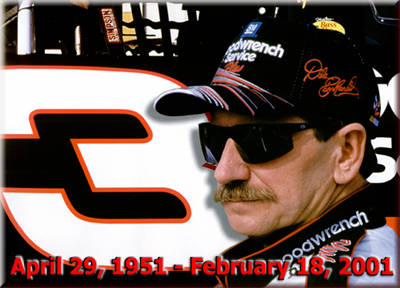
Remembering the Intimidator

I am the first to admit that I am not a racing fan, but my past is linked to many racing greats.  Among them is Dale Earnhardt, or as many fondly referred to him, "the Intimidator."  I only met him twice.  Both happened way back in 1991 at Heartland Park Topeka (HPT).
The new $20 million track was trying to get a footing in the racing business.  It really wanted to draw Nascar to town with its sprawling road course so management booked an ARCA event--the Wendy's Big Classic 100.  Fans flocked from around the Midwest to watch it because HTP signed Kenny Schrader, Darrell Waltrip and Earnhardt to race in the minor circuit event.  (Earnhardt got a $50,000 appearance fee.)

I met Earnhardt earlier in the week as his crew set up shop on pit row.  I found him to be very welcoming in a "good old boy" kind of way.  He was friendly, knowledgeable and accommodating.  An interesting story people don't know about that week is since he had other mid-week commitments, Earnhardt could not stay with his team to qualify for the race.  Instead, he left everything in the hands of his 15 year old son, Dale Earnhardt Jr., and had Schrader look after him. 

Heartland Park Topeka during a drag racing event
Heartland Park Topeka road course
When race day rolled around on Sunday, the Intimidator lived up to his nickname is more ways than one.  Because he did not qualify, he started dead last in the pack of 35 drivers.  Earnhardt needed only 13 laps to roar through the field from 35th place to third.  While the throng of media was in the media tower monitoring the race, I was with my photographer on the infield documenting the sights and sounds.  Then we got word that Earnhardt ran his car off the track on the back part of the course.  Almost immediately, one of the HPT trucks dropped him off right by us.  When I say he was angry, I mean he was really, really angry.  As he walked across the infield in front of the jammed grandstand, I was about a half step behind him off to one side.  After about 30 yards or so he turned to me and said something like "Well, do you have a question to ask, or what?!"  I asked him what happened.  From what I could hear over the roar of the engines, he said something about being too aggressive and losing control.  I also asked him if the crash would bring him  back to try to put the track "in its place."  Again, he was pretty angry, said something like "You never know," and that was it.  Then a car pulled up, he climbed in, and he drove out of the infield, past pit row, and straight to the airport where he flew out of town.  By then the throng of media came running toward us from the media tower a couple of hundred yards away.  "Where did he go?" they asked.  "I guess he's gone," I said.  "What did he say?" they asked.  "You'll have to watch tonight at ten," I told them.

Schrader collides with Earnhardt at Daytona
Ten years later, Dale Earnhardt died after crashing hard into the wall at Daytona International Speedway.  Ironically, Kenny Schrader was also involved in that crash and Darrell Waltrip was in the broadcast booth announcing it.  The day was February 18, 2001--11 years ago today.  I'd say "rest in peace" Dale Earnhardt, but something tells me the Intimidator would rather look for another competition to conquer.        


Thursday, February 2, 2012

My "Happiest Place on Earth"

I have a beef with Walt Disney.  His Disneyland and Disney World theme resorts proudly proclaim themselves as the "happiest place on earth."  I took my family to both places in the past.  Don't get me wrong, they're great, but in my opinion, they do not compare to my "happiest place on earth."

Mine is called Spring Hollow, but in my family we simply call it "the crevice."  It's a narrow opening cut out of sandstone cliffs in the Virgin River Valley of southern Utah.  It's located on private land just south of the small town of Glendale on Highway 89.  We took family vacations to that area every year of my childhood and it seems we always headed up the crevice.  We returned there again this summer, but this time as a big group including three generations of Holyoaks.


Hiking in to Spring Hollow
The trailhead begins at 5,700 feet.  The trail meanders along the bottom of a wash, also known as Spring Hollow Creek, although there's rarely any water in it during the summer. The farther you go, the closer the two sides of the canyon press in on you.  The hike ends in a box canyon of sorts about a quarter mile later after a total elevation gain of only 300 feet.  The sizzling southern Utah sun no longer beats down on you as you enter the suddenly cooler and shaded chamber.  When the season is right, or after a recent rainfall, you see water trickling over a natural waterfall down a wall of horizontal, thin-layered strata into a deep pool.  And what's really neat is when you look around, you see carvings in the sandstone that not only date back decades, but some of them date back to the 1800s.

The Holyoak gang arrives at the Crevice
Then the real fun starts. 

Aubrey, Kenny & Lacey start the climb
It's time to head up the crevice. 

Lacey & Aubrey on the left...my nieces Lindsey, Zoe & Emily on the right
Simply put, you put your back on one wall and your feet on the other and you shimmy straight up about 15 to 20 yards. 

Mark nearing the top...Emily, Kathrine & Kerry near the bottom
Once on top, you'll find the Holyoak Wall.  It's a slab of rock where we carved our names over the years.  If your name is already there, then you carve the date you returned.  Dates on the Holyoak Wall go back decades.  
Holyoak Wall
I took my wife up the crevice just weeks after we got married so she could chisel her name into the wall.  Each of my four kids also hiked the crevice to carve their names.  My youngest and my son-in-law just added their names on this most recent trip (so now they're "officially" Holyoaks).  

Looking down from on high...Jace already up there
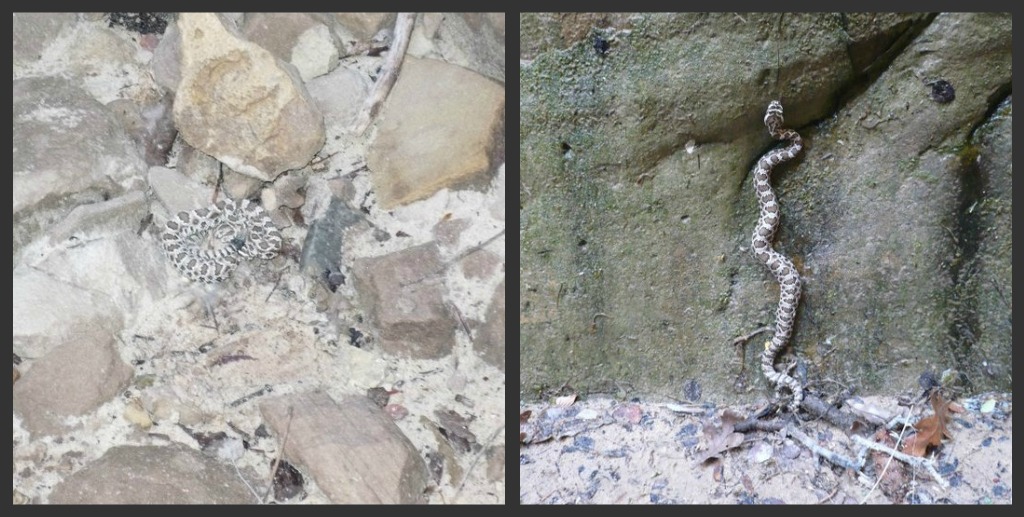
Once on top, you can then drop back down 10 feet or so into another wash that leads to another natural waterfall about 40 yards away.  On this particular day, we came across something I'd never seen on the hike--a small rattlesnake. (We actually saw two rattlers that day.)

"Don't tread on me"
There aren't as many carvings up top, but there are many more places to climb, pose and take photos.  (Is this a great playground or what?) 

"Working out" 15 feet above the floor below (far waterfall in background)
There are no crowds, no lines, no Matterhorn, no Star Tours, no Jungle Cruise, no Pirates of the Caribbean, and (thank goodness) no Small, Small World. 

It's a long way up
Every time I hike in Spring Hollow, I always hate to eventually leave because I just don't know when I'll return. 

Updating the wall
I do know it's a place that will live on forever in Holyoak lore. 
The hiking Holyoaks
(Hallie, Lacey, Lori, Mark, Jace, Aubrey & Kenny)
During this visit, my son carved out his own Holyoak Wall in a different place.  He said years from now, it will be there for his wife and kids.  If that didn't put a smile on my face, I don't what will.  The tradition continues.

Throwback photo 1 when I was younger

Throwback photo 2 when I was younger

The original hiking Holyoaks (Mark & his folks)
Spring Hollow--the happiest place on earth.

Monday, January 9, 2012

Fly Like an "Eagle"

Every father wants to see his son bypass his own accomplishments, and that's exactly what I'm witnessing.  My son Jace is already taller than me, better looking than me (just barely), and now he reached the pinnacle of scouting--something I never got close to achieving.

I began as a cub scout in Wichita, Kansas.  Shortly after that, we moved to Calgary, Alberta where I turned 11 and became a boy scout.  With the help of my scout leader mother, I gathered enough merit badges to earn a bronze chain.  (In Canadian scouting, there are three levels--bronze chain, silver chain, and gold chain, and then you become what's called a Queen Scout.)  When we later moved back to the Wichita, I looked to continue my scouting career but the Boy Scouts of America did not accept any of the work I did in Canada--not First Aid, not Citizenship, none of it.  Plus, the local boy scout office lost my sash with all my Canadian boy scout badges on it.  Rather than accept what happened, learn from it, persevere, and move forward, I threw in the towel.  


Contrast that "defeated" attitude with Jace.  He, too, had a scout leader mother who helped him along his early path.  As a boy scout, he busted out of the gate under the direction and motivation of his 11 year old scout leader, Larry Seipert.  Jace already achieved the rank of First Class by the time he turned 12.  He attended several scout camps--Melita Island in Montana and Camp Grizzly in north Idaho.  While at Camp Grizzly, he noticed the work put in by the youth staffers and how they successfully mentored the younger boys.  "Dad," he said, "I'd like to become a staffer too."  That winter, he applied to become a merit badge counselor at Melita Island (see video below). 

He was thrilled when he received word of his acceptance.  That summer, I drove him to Flathead Lake where, now as a Life scout, he boarded one of the historic Melita Arks (see video below) for his six week stay on Melita Island.  


He went to Melita, his first extended trip away from home, without knowing a single person.  But soon, he had many friends.  They gave him the nickname "Lolo" based on the small town south of Missoula where he grew up.  As a staffer, he taught and supervised other young scouts from Montana, Idaho, Washington, Wisconsin and other states who visited Melita Island with their scout troops for a week at a time. While he also assisted with the daily morning and evening flag ceremonies, took part in the Sunday evening skits in the amphitheater, and helped in the kitchen and Trading Post, his main duty was to help scouts earn merit badges in the Nature division of camp.  Even though he was a staffer, he used some of his spare time to earn other merit badges that interested him.  He also asked the senior staffers to help him earn the few required merit badges he still lacked to qualify for the rank of Eagle.  (At least one member of Jace's troop and Jace's cousin from Idaho followed in his footsteps to work as staffers at Melita Island.) 

Lori pins the Eagle medal on Jace

(Camp administration encourages parents and families to visit the island and spend the night to see how it operates.  As a family, we surprised Jace one afternoon and spent the night there.  I spent two other nights there--once with my wife and the other by myself after dropping him off for his second summer there.  During my first visit, I took a camera with me to do a series of stories on Melita Island for KPAX-TV.) 


Melita Island Camp Director Erik Isaacson & Scoutmaster and
long-time family friend Cameron Criddle 
We brainstormed as a family and came up what seemed to be a worthy Eagle project--the final requirement that would allow Jace to become an Eagle scout.  He wanted to erect a "Welcome to Lolo" sign on the north edge of town.  He received an enthusiastic "thumbs up" from both the Lolo Community Council and the Missoula County Commission, so he started to make the sign become a reality.  Jace began fundraising at various businesses all around Lolo.  He also received the donation of three logs from Plum Creek.  Jace came up with a design and initially consulted with a sign builder in Frenchtown before that became a dead end.  At that point, he encountered a bureaucratic nightmare of legal red tape.  He was disappointed, then rejuvenated, then disappointed, then rejuvenated.  It was a long, long process (see video at the very bottom) involving Missoula County, the State of Montana, and other entities.  In the end, it took almost two years for Jace to get final approval on a small piece of land where he could erect the sign.  Then he turned to Sentinel High School shop teacher Kevin Schooler, who volunteered on his own time to help Jace finalize a design and then eventually build the sign.  Jace received great support from his fellow 1986 troop members and several of the boys' fathers.


Troop 1986 flag ceremony

Jace & his American flag cupcakes
  
The public nature of the project led to a lot of attention once the sign was finally up.  That included positive email and phone messages, letters to the editor, and a nice article in the Missoulian newspaper.  Read it here.
 
Jace awards Mother's Pin to his mom, Mentor Pin to Larry Seipert & Father's Pin to his dad

The court of honor was a special evening.  Those who attended included family, friends, scout troop members, LDS church members, Melita Island leaders, civic leaders, and other community members.  Jace also received letters of commendation from Senator Max Baucus, Senator Jon Tester, Congressman Denny Rehberg, Governor Brian Schweitzer, and Missoula Mayor John Engen.  (Here is the video we showed that evening of Jace growing up in scouting, a closer look at Melita Island Scout Camp, and Jace himself describing the challenges he faced erecting the "Welcome to Lolo" sign:)


From a proud father to his Eagle scout son.  Jace, congratulations on your patience and perseverance.  I salute you for a job and a scouting career extremely well done!

The Eagle Scout & his proud family

Thursday, August 11, 2011

14,300,000,000,000 is an Unlucky Number

Remember getting on that playground carousel as a kid and spinning until you thought you'd throw up?  Remember feeling like your brain would explode when you hovered over that first Geometry test?  Okay, follow my lead.  Grab a firm hold of the chair you're sitting in and click on this link:  National Debt Clock.  Did you do it?  Okay, breathe in, breathe out.  Now focus.  Just look at all the red--total debt, personal debt, interest debt, mortgage debt, credit card debt, Social Security liability, prescription drub liability, Medicare liability, bankruptcies, foreclosures, etc.  The red just goes on and on and on.  It's mind blowing, isn't it?    

Let's have a little history lesson in National Debt 101.  America has always been in debt.  It racked up approximately $75 million in unpaid expenses by winning  its freedom from England in the Revolutionary War.  From there, the U.S.started cutting into its debt until the Civil War rolled around when it ballooned from $65 million to almost $3 billion.  Again, the post-war nation rebounded with an extended period of prosperity until we entered World War I.  When it ended, the debt reached more than $25 billion.  After World War II, America's gross public debt shot up to $260 billion.  (Do you see a pattern here?)        

The national debt continued to rise over the years, but it really took off in the last two decades.  Thanks, in part, to his "Bush Tax Cuts" program, and starting new wars in Iraq and Afghanistan, the debt under President George W. Bush exploded from $5.7 trillion to $10.7 trillion by the end of 2008.  The spending continued when President Barack Obama took office thanks, in part, to his economic stimulus package and bailouts of the banking and auto industries.  After his first 28 months in office, the national debt increased by 25 percent.


Here's the problem.  America just maxed out its credit card.  On May 16, the national deficit hit $14.3 trillion, the same amount as the $14.3 trillion national debt ceiling.  In other words, the United States reached its legal borrowing limit.  That did receive a mention in the national media and the Treasury Department put a temporary hold on spending until it shuffled several funds around to keep the country financially afloat.  According to the Wall Street Journal, the U.S. would only suffer a default after all emergency measures are exhausted and it runs out of cash of pay its bills.  Treasury officials say that will happen on August 2 unless Congress does not raise the debt ceiling (again) before then.  If that does not happen, they say an economic catastrophe will follow. 

My question is when in the heck is America going to wake up and deal with its financial overspending habit?  The only president over the last 30 years to live within a budget was President Bill Clinton, and he did so by working with a Republican-controlled Congress.  Unfortunately, it looks like America's lack of financial sense will only continue.  Last week, President Obama announced during a major speech on Middle East policy that he will relieve Egypt from paying the one billion dollars it owes the United States.  Shortly after the raid that killed Osama bin Laden in Pakistan, government officials there ripped the U.S. for its action and scores of protesters took to the streets vowing vengeance.  It turns out America paid Pakistan approximately $20 billion in "counter-terrorism" aid over the last decade and plans on paying Pakistan another $2.3 billion next year alone.  

I understand the United States is the world's "do gooder," but when do we pull back the reigns and focus on us?  If we don't experience a sudden change of heart and chart a new course, getting sick on the financial carousel will be the least of our problems.